
Reverse Osmosis vs Evaporation for Leachate – Article-At-A-Glance
- Reverse osmosis and vacuum evaporation are the two most effective leachate volume reduction methods available to landfill operators today.
- Evaporation concentrates pollutants into a smaller volume first, making downstream RO treatment significantly more efficient and cost-effective.
- In lab-scale tests, only 1% of organic content transferred into the evaporation distillate, while ammonia transfer reached 20% — a critical factor in system design.
- The combined evaporation-then-RO process achieved complete removal of pollutants from industrial landfill leachate in controlled studies.
- Choosing the wrong method — or skipping pre-treatment — can result in rapid membrane fouling, increased operational costs, and regulatory non-compliance.
Two Methods Dominate Leachate Volume Reduction — Here’s What You Need to Know
Leachate management is one of the most technically demanding challenges in modern landfill operations, and getting the treatment method wrong is costly.
When it comes to reducing leachate volume at scale, two approaches consistently outperform the rest: reverse osmosis (RO) and vacuum evaporation. Both have real advantages, both have real limitations, and in many industrial settings, the most effective solution combines them sequentially. Understanding exactly how each method works — and where the performance data actually lands — is what separates efficient landfill operations from ones that bleed money into treatment costs year after year.
For waste management professionals navigating leachate treatment options, resources that break down process performance with real data points are invaluable. Waste management optimization guidance that covers both technical and cost-side considerations can make a measurable difference in how treatment systems are designed and operated.
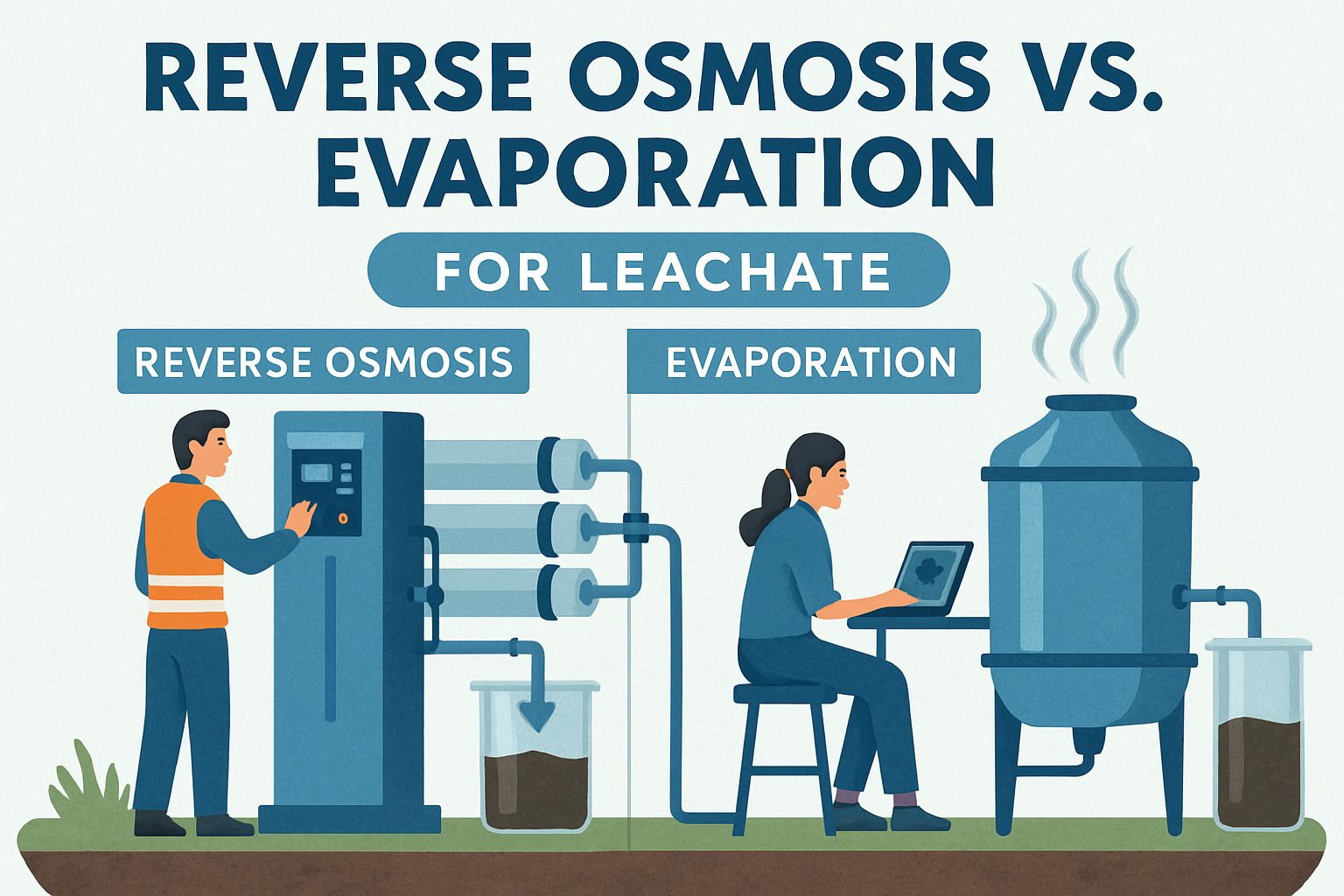
- Reverse osmosis uses semi-permeable polyamide membranes to separate dissolved pollutants from water at high pressure
- Vacuum evaporation removes water from leachate by heating it under reduced pressure, concentrating contaminants into a smaller residual volume
- Combined systems run evaporation first to reduce volume and load, then use RO to polish the output to discharge standards
- Evaporation ponds with black geomembrane liners offer a passive, low-cost alternative for sites with suitable climate conditions
What Makes Leachate So Difficult to Treat
Landfill leachate is not just contaminated water. It is a complex, highly toxic mixture that includes dissolved organic compounds, ammonia nitrogen, heavy metals, inorganic salts, xenobiotics, and biological organisms — all in concentrations that vary dramatically depending on landfill age, waste composition, and rainfall infiltration. This variability is precisely what makes standardized treatment so difficult.
High Organic and Ammonia Content in Industrial Leachate
Industrial landfill leachate routinely presents with chemical oxygen demand (COD) values and ammonia nitrogen (NH?–N) concentrations that overwhelm conventional treatment systems. Research has documented initial COD concentrations as high as 35,000 mg/L and NH?–N concentrations reaching 1,600 mg/L in stabilised leachate — levels that would rapidly foul untreated RO membranes and push biological treatment systems beyond their operational limits. The high ammonia load, in particular, demands careful process design because ammonia behaves differently across treatment stages and pH levels.
Heavy Metals and Inorganic Compounds That Complicate Treatment
Beyond organics and ammonia, leachate carries heavy metals and inorganic salts that create scaling and fouling risks across all membrane-based treatment systems. These compounds do not evaporate readily, which is actually an advantage during the evaporation stage — they stay concentrated in the residual volume rather than passing into the distillate. However, their presence in the RO feed stream requires precise pre-treatment to avoid irreversible membrane damage. For more information on managing these challenges, explore MBT leachate management treatment options.
Regulatory Pressure Driving the Need for Better Volume Reduction
Discharge standards for leachate are tightening across most jurisdictions, pushing landfill operators toward treatment technologies capable of achieving near-complete pollutant removal rather than simple dilution or partial treatment. The shift toward membrane-based and thermal treatment processes is a direct response to this regulatory environment. Volume reduction is not just about lowering transport costs — it is increasingly a compliance requirement, with concentrate management becoming a central concern in system design.
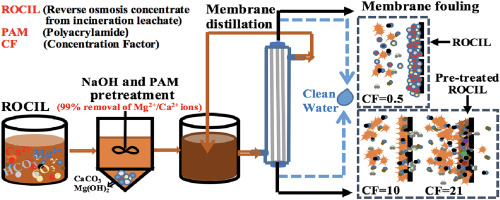
“Effective treatment of reverse osmosis concentrate from incineration leachate using direct contact membrane distillation coupled with a NaOH/PAM pre-treatment process – ScienceDirect” from www.sciencedirect.com and used with no modifications.
How Reverse Osmosis Works for Leachate Treatment
Reverse osmosis forces leachate through a semi-permeable membrane under high pressure, separating clean permeate water from a concentrated reject stream containing the bulk of dissolved pollutants. It is one of the most proven technologies in leachate treatment, capable of achieving removal efficiencies above 95% for a wide range of contaminants when operated correctly.
The Role of Polyamide Membranes in Pollutant Separation
The membrane type matters enormously in leachate RO applications. Two-ply and three-ply polyamide composite membranes — commonly referenced as AD and SC membrane configurations — are the standard in industrial leachate treatment. The structural difference between these membrane types directly affects rejection rates for specific pollutants, particularly ammonia and low-molecular-weight organics that can partially pass through less selective membranes. Membrane selection must be matched to the specific leachate composition being treated, not applied generically.
Membrane fouling remains the primary operational challenge. The combination of high organic load, biological activity, and inorganic scaling agents in raw leachate creates fouling conditions that can degrade membrane performance rapidly without adequate pre-treatment. This is exactly why evaporation as a pre-treatment step — reducing volume and concentrating fouling agents into the residual — dramatically extends membrane operational life.
Why pH Control Is Critical for Ammonia Removal in RO
Ammonia exists in equilibrium between its ionic form (NH??) and its free form (NH?) depending on pH. At lower pH values, ammonia is predominantly ionic and is effectively rejected by RO membranes. As pH rises above 9, free ammonia becomes dominant — and free ammonia passes through polyamide membranes far more readily than the ionic form. This means pH management is not optional in leachate RO systems; it is a core process control parameter that directly determines ammonia removal efficiency in the permeate.
Where RO Fits in a Multi-Stage Treatment Chain
RO is most effective when it operates as a polishing step rather than a front-line treatment technology for raw, high-strength leachate. In well-designed treatment chains, leachate first passes through biological pre-treatment — such as an aerobic lagoon, sequencing batch reactor (SBR), or upflow anaerobic sludge blanket (UASB) reactor — before reaching the RO stage. This sequence reduces the organic and biological load that would otherwise accelerate membrane fouling.
State-of-the-art installations combine ultrafiltration (UF) ahead of RO to provide an additional barrier against particulates and colloidal material. The UF+RO sequence has demonstrated removal efficiencies greater than 98–99% for COD, color, and conductivity in treated leachate systems. When the feed leachate also passes through an evaporation stage first, RO performance improves further because the volume of water being processed is reduced and the pre-concentration step removes the most aggressive fouling compounds.
Process Note: A documented industrial treatment sequence — aerobic lagoon ? SBR ? UF ? RO — achieved consistent pollutant removal at greater than 98% efficiency for COD and conductivity. Adding vacuum evaporation ahead of this chain further reduced the volume load on the membrane system and improved overall treatment economics.
How Evaporation Works for Leachate Volume Reduction
Evaporation removes water from leachate by converting it to vapour, leaving behind a concentrated residual that contains the bulk of dissolved and suspended contaminants. In industrial leachate treatment, this process is controlled to maximise water recovery while keeping contaminant carryover into the distillate as low as possible. Learn more about reverse osmosis technology and its role in pollutant removal.
Vacuum Evaporation at Low Temperatures: The 40°C and 45 mmHg Process
Vacuum evaporation operates by reducing atmospheric pressure over the leachate, which lowers the boiling point of water significantly. In documented industrial applications, leachate evaporation has been conducted at approximately 40°C under a vacuum of 45 mmHg. These low-temperature conditions are deliberately chosen to minimize energy consumption and reduce the volatilization of ammonia and organic compounds into the distillate stream — both of which increase as temperature rises.
The low operating temperature also opens the door to using waste heat or low-grade service fluids as the energy source, rather than dedicated high-temperature heating systems. Operating at 35–40°C using available service fluid is one of the primary cost advantages vacuum evaporation holds over higher-temperature thermal treatment alternatives. In industrial settings where waste heat streams are available, the marginal energy cost of running vacuum evaporation can be substantially lower than running RO pumping systems at equivalent throughput.
The vacuum itself is maintained using a condensing system that captures the evaporated water vapor and converts it back to liquid distillate. The quality of this distillate — specifically how much ammonia, organic content, and metals transfer into it — determines whether the distillate can be discharged directly or requires further treatment. For more insights, explore how to treat landfill leachate effectively.
Three Phases of Distillate Collection During Evaporation
During vacuum evaporation of landfill leachate, the distillate is not collected as a single uniform output. Instead, researchers and operators have identified three distinct phases of distillate production that differ in composition and contaminant load. Understanding these phases is essential for designing downstream treatment steps and for accurately predicting overall system performance.
In the early phase of evaporation, the distillate carries the highest concentration of volatile compounds — primarily ammonia and low-boiling-point organics that preferentially transfer into the vapour phase at the start of the process. As evaporation continues into the middle phase, the rate of volatile compound transfer decreases as their concentrations in the remaining leachate drop. The final phase produces distillate that is predominantly water with minimal contaminant carryover, reflecting the depletion of volatile species from the concentrated residual.
This phase-dependent behaviour has direct implications for treatment design. If the early-phase distillate is collected separately and treated specifically for ammonia — through stripping or struvite precipitation — the bulk of the distillate volume from the middle and final phases may meet discharge standards with minimal additional treatment. Blending all three phases together dilutes the problem without solving it, and increases the treatment burden on downstream systems unnecessarily.
- Early phase: Highest ammonia and volatile organic concentration — requires dedicated ammonia removal treatment
- Middle phase: Decreasing contaminant load as volatile species deplete from the leachate concentrate
- Final phase: Near-clean water output with negligible contaminant carryover, often suitable for further polishing via RO
Treating these phases as a single combined stream is one of the most common design mistakes in evaporation-based leachate systems. Phase-segregated collection and treatment is more complex operationally, but it significantly reduces total treatment chemical consumption and can lower overall system operating costs.
How Evaporation Concentrates Ammonia, Metals, and Organics
The fundamental mechanism behind vacuum evaporation’s effectiveness is selective concentration. Heavy metals and most inorganic salts have negligible vapour pressure at operating temperatures of 35–40°C and remain almost entirely in the liquid concentrate. Organic compounds with low volatility behave similarly, concentrating in the residual volume rather than transferring to the distillate. Ammonia, being more volatile than metals and many organics, does transfer partially — but documented transfer rates of approximately 20% mean that 80% of the ammonia load stays in the concentrate, which significantly reduces the treatment demand on downstream RO systems.
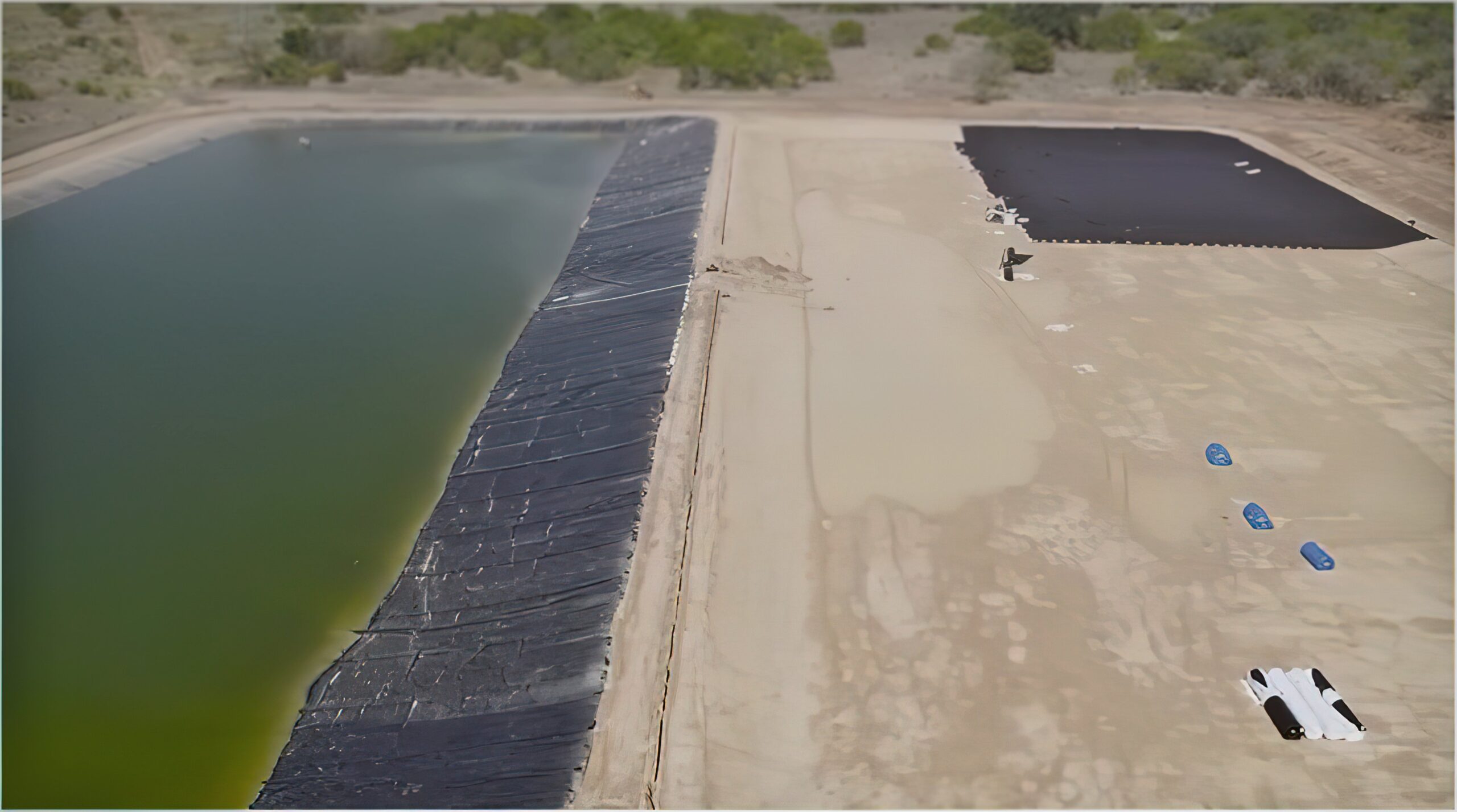
“Industrial Evaporation Pond Lined with XR-5 Geomembrane | Case Study” from www.seamancorp.com and used with no modifications.
Evaporation Ponds and Black Geomembrane Liners as a Low-Cost Option
Evaporation Pond Configuration: Black geomembrane liners serve a dual function — they provide a leachate-impermeable containment barrier while simultaneously absorbing solar radiation to enhance natural evaporation rates. An oil/water separator such as a gun barrel tank is used first to separate oil from leachate before the water fraction is piped to the pond. The separated oil is then sent off-site for disposal or recovery.
Evaporation ponds are one of the most cost-effective passive methods for leachate volume reduction when climatic conditions support them. In arid and semi-arid regions where evaporation rates consistently exceed rainfall, surface evaporation ponds can handle substantial leachate volumes with minimal energy input and low capital cost compared to mechanical treatment systems.
The use of black geomembrane liners is a critical design element that separates an effective evaporation pond from a simple containment lagoon. The black surface absorbs significantly more solar radiation than standard gray or transparent liners, increasing the surface temperature of the leachate and accelerating evaporation rates. The liner also provides the required hydraulic containment to prevent leachate from contaminating underlying soil and groundwater — a non-negotiable regulatory requirement in virtually all jurisdictions. For more information on technologies used in leachate management, you can explore the use of reverse osmosis technology.
The limitation of evaporation ponds is their dependence on climate and land availability. In humid climates, where annual rainfall equals or exceeds evaporation rates, ponds become net receivers of water rather than reducers of volume. For sites in temperate or wet climates, mechanical vacuum evaporation or RO-based systems remain the only viable large-scale volume reduction options. Evaporation ponds should therefore be evaluated as a primary tool only for sites with confirmed favourable water balance data.
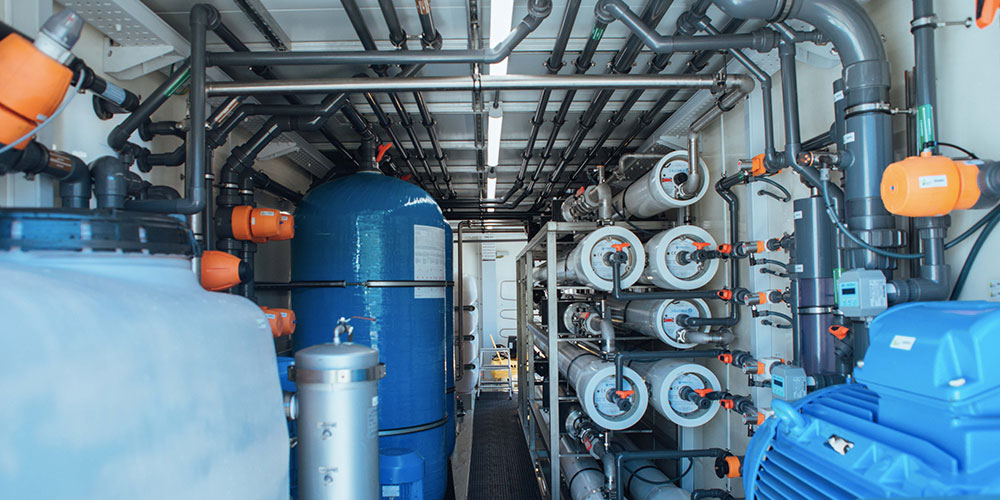
“Leachate Reverse Osmosis – AST Ambiente” from ast-ambiente.com and used with no modifications.
Reverse Osmosis Performance: What the Data Shows
When RO is applied to pre-treated or evaporation-concentrated leachate, the performance data is compelling. Documented systems using membrane filtration — specifically UF followed by RO — have achieved removal efficiencies exceeding 98–99% for COD, color, and conductivity. These figures represent the upper end of what membrane technology can deliver, and they are contingent on correct pre-treatment, proper membrane selection, and disciplined operational pH control throughout the process.
AD Membrane vs. SC Membrane: Two-Ply vs. Three-Ply Polyamide Results
The distinction between two-ply polyamide composite membranes (AD configuration) and three-ply polyamide composite membranes (SC configuration) is not merely structural — it translates directly into measurable performance differences when treating leachate. The additional active layer in the SC membrane provides higher rejection rates for low-molecular-weight compounds, including ammonia and small organic molecules that partially bypass the AD membrane. In leachate applications where ammonia removal is a primary treatment objective, the SC membrane’s additional selectivity justifies its higher capital cost through reduced post-treatment requirements. However, the AD membrane’s lower resistance to flow can offer throughput advantages in high-volume applications where ammonia rejection is managed through pH control rather than membrane selectivity alone.
Pollutant Removal Rates Achieved With RO Post-Evaporation
When RO operates on leachate that has already been concentrated through vacuum evaporation, the system benefits from a significantly reduced feed volume and a more predictable contaminant profile. The evaporation stage removes the bulk of volatile organics and concentrates non-volatile compounds, which means the RO membrane faces a feed stream with lower fouling potential from biologicals and a reduced ammonia load. This translates to extended membrane cleaning intervals and more consistent rejection performance over time. For more information on how to manage leachate effectively, explore various MBT leachate management treatment options.
Studies combining evaporation pre-treatment with reverse osmosis have demonstrated complete removal of target pollutants from industrial landfill leachate — a result that is difficult to achieve with RO alone on raw, high-strength leachate. The combination of near-zero organic carryover from the evaporation stage and high membrane rejection rates in the RO stage creates a treatment chain where the weaknesses of each individual technology are compensated by the strengths of the other.
Evaporation Performance: What the Data Shows
Vacuum evaporation performance in leachate treatment is best evaluated across three contaminant categories: organic content, ammonia nitrogen, and heavy metals. Each behaves differently during the evaporation process, and the data across these categories tells a very different story from what many operators assume going in.
Organic Content Reduction: Only 1% Carried Into the Distillate
One of the most significant performance figures from evaporation studies is the organic content transfer rate into the distillate. Research has documented that only approximately 1% of the organic content present in the raw leachate transfers into the distillate during vacuum evaporation at 40°C and 45 mmHg. This means 99% of the organic load remains concentrated in the residual volume, dramatically reducing the organic treatment burden on any downstream RO system. For high-strength industrial leachate with COD values in the tens of thousands of mg/L, even a 1% transfer represents a measurable organic load in the distillate — but it is a fraction of what the RO membrane would face processing raw leachate directly.
Ammonium Transfer Rate: 20% Found in the Distillate
Ammonia is the most problematic component in terms of distillate contamination during leachate evaporation. Unlike metals and most organics, ammonia is sufficiently volatile at low operating temperatures to transfer meaningfully into the vapor phase. Research data places the ammonium transfer rate at approximately 20% of the initial leachate ammonia content — meaning that one-fifth of the total ammonia load ends up in the distillate stream rather than staying in the concentrate. For more insights on treatment options, explore MBT leachate management treatment options.
This figure has direct consequences for distillate management strategy. A distillate containing 20% of the original ammonia load will almost certainly exceed direct discharge limits for ammonia nitrogen in most regulatory environments. This makes ammonia-specific post-treatment of the distillate non-negotiable in most applications. The two most cost-effective options for distillate ammonia management are struvite (MAP) precipitation — applied at the stoichiometric ratio of Mg:NH?:PO? = 1:1:1 — and ammonia air stripping, which has been identified as the lowest-cost option for high ammonium removal from pre-treated streams.
| Contaminant | Transfer Rate to Distillate | Remains in Concentrate | Post-Treatment Required? |
|---|---|---|---|
| Organic Content (COD) | ~1% | ~99% | Minimal / RO polishing |
| Ammonia Nitrogen (NH?–N) | ~20% | ~80% | Yes — stripping or MAP precipitation |
| Heavy Metals | Negligible | Nearly 100% | No — managed in concentrate |
| Inorganic Salts | Negligible | Nearly 100% | No — managed in concentrate |
The ammonia transfer rate also reinforces why phase-segregated distillate collection matters. The early distillate phase carries a disproportionately high ammonia concentration relative to the total 20% average. Treating only the early-phase distillate for ammonia — rather than the full distillate volume — reduces chemical consumption in struvite precipitation or reduces air volume requirements in stripping systems substantially.
Metal Content in the Distillate: Negligible Carryover
Heavy metals show negligible transfer into the distillate during vacuum evaporation, which is one of the technology’s most operationally significant advantages. Because metals remain in the liquid concentrate rather than volatilizing, the distillate is essentially metal-free at typical operating temperatures of 35–40°C. This eliminates heavy metal contamination as a concern for distillate discharge or downstream RO treatment and concentrates the metal management challenge entirely within the smaller-volume residual stream — where it is far easier and less costly to address.
Cost Comparison: Reverse Osmosis vs. Evaporation
Cost comparisons between RO and evaporation must account for capital investment, energy consumption, chemical costs, membrane replacement or maintenance, and concentrate or residual disposal. No single number captures the full picture, and the economics shift significantly depending on leachate strength, available energy sources, site climate, and regulatory discharge requirements. That said, clear patterns emerge from documented industrial applications that provide a practical framework for decision-making.
Ammonia stripping has been consistently identified as the most cost-effective standalone option for high ammonium removal from pre-treated leachate. However, when both high COD and ammonia removal are required simultaneously — which is the standard regulatory requirement in most jurisdictions — membrane technology combining UF and RO delivers the necessary dual performance that stripping alone cannot achieve. The cost premium for membrane systems over stripping-only approaches is justified where discharge limits require near-complete pollutant removal across all contaminant classes.
Energy Costs of Vacuum Evaporation at 35–40°C Using an Available Service Energy Source
The energy cost of vacuum evaporation is heavily influenced by the operating temperature and the heat source available. Running vacuum evaporation at 35–40°C using an available service energy source — such as low-grade waste heat from industrial processes or landfill gas combustion — reduces the marginal energy cost to a fraction of what dedicated heating would require. At these temperatures, the vacuum system itself (typically a water ring pump or liquid ring pump maintaining approximately 45 mmHg) becomes the primary electrical load rather than the heating element. For industrial sites with access to waste heat streams, the operational energy cost of vacuum evaporation can be substantially lower than running high-pressure RO pumping systems processing equivalent volumes of untreated leachate — making the evaporation-first approach economically attractive even before accounting for the membrane life extension benefits it provides downstream.
Operational Costs of RO Membrane Systems at Scale
At industrial scale, RO membrane systems carry significant operational costs that extend well beyond energy consumption. Membrane replacement cycles, chemical cleaning agents, high-pressure pump maintenance, and concentrate disposal all contribute to the total cost of ownership. Polyamide composite membranes used in leachate applications typically require more frequent cleaning than those treating municipal wastewater, driven by the aggressive fouling characteristics of landfill leachate. When RO operates on raw or minimally pre-treated leachate, cleaning frequency increases sharply — directly increasing chemical consumption and reducing membrane service life, both of which push operational costs higher.
The concentrate stream produced by RO systems presents its own disposal cost challenge. Because RO rejects rather than destroys pollutants, the membrane concentrate contains everything the permeate leaves behind — at elevated concentrations. Disposing of this concentrate stream, which carries hazardous characteristics from heavy metals, high-strength organics, and salts, requires either further treatment or licensed disposal. This concentrate management cost is frequently underestimated in system design budgets and becomes one of the dominant operational expenditure drivers in large-scale RO leachate treatment systems over time.
Where Evaporation Ponds Offer the Best Cost-Per-Volume Reduction
Evaporation ponds deliver their best cost-per-volume reduction performance in arid and semi-arid climates where the annual potential evaporation rate significantly exceeds annual precipitation. In these conditions, a properly lined evaporation pond with a black geomembrane base can process substantial leachate volumes with minimal ongoing energy input, no membrane replacement costs, and low chemical consumption. The capital cost of constructing a lined evaporation pond — including excavation, geomembrane installation, and oil/water separation equipment such as a gun barrel tank — is generally far lower than equivalent-capacity mechanical treatment systems.
A oil/water separation step is only necessary under some regulatory regimes. However, when oil/water are present in a leachate, the economics of evaporation ponds improve further when leachate has already passed through an oil/water separation step. Removing the oil fraction first prevents surface film formation that would otherwise suppress evaporation rates and complicate liner maintenance. The separated oil is sent off-site for disposal or recovery, and the water fraction — now free of surface-inhibiting oils — evaporates at rates consistent with the climate data used in pond sizing calculations. For more strategies on managing leachate, explore strategies for minimizing leachate generation in landfills.
The critical caveat is land availability and regulatory approval. Evaporation ponds require significant surface area relative to the volume of leachate they process, and siting a new evaporation pond adjacent to an active landfill must satisfy setback requirements, groundwater monitoring obligations, and liner specification standards. Where land is constrained or regulatory approval timelines are long, mechanical evaporation or RO-based systems will deliver faster deployment and more predictable volume reduction outcomes regardless of climate conditions.
Combining Evaporation and RO: A Two-Stage Process That Works
- Vacuum evaporation runs first, reducing leachate volume and concentrating non-volatile pollutants into a smaller residual stream
- The distillate — carrying approximately 1% of organics and 20% of ammonia from the original leachate — is collected for downstream treatment
- The evaporation concentrate, containing nearly all heavy metals, inorganic salts, and the majority of organic load, is managed separately
- RO then treats the distillate, achieving near-complete removal of remaining dissolved pollutants including residual ammonia and organics
- The combined process has achieved complete pollutant removal from industrial landfill leachate in documented studies
The logic behind combining these two technologies is straightforward: each method compensates for the other’s primary weakness. Evaporation alone cannot achieve complete pollutant removal because volatile compounds — particularly ammonia — transfer meaningfully into the distillate. RO alone struggles with raw, high-strength leachate because aggressive fouling conditions degrade membrane performance rapidly and increase operational costs substantially. Together, they form a treatment chain where evaporation handles the volume reduction and pre-concentration work, and RO delivers the final purification step on a feed stream that is far more manageable than raw leachate. For more insights, explore biological vs. chemical leachate treatment options.
The sequential process also solves the concentrate disposal problem that plagues standalone RO systems. In a combined evaporation-RO system, the evaporation concentrate — which is small in volume but very high in contaminant concentration — is managed as a distinct waste stream separate from the RO concentrate. The RO concentrate produced from treating evaporation distillate is far less hazardous than RO concentrate generated from raw leachate, because the evaporation stage has already removed the metals, inorganic salts, and bulk organics that create hazardous concentrate characteristics in standalone RO applications.
Industrial-scale implementation of this combined approach typically incorporates biological pre-treatment upstream of both stages. An aerobic lagoon or sequencing batch reactor (SBR) reduces the biological oxygen demand of the raw leachate before it enters the evaporation stage, lowering the organic load the evaporator must handle and reducing the concentration of biologically active compounds in the distillate. This three-stage sequence — biological pre-treatment, vacuum evaporation, then reverse osmosis — represents the most comprehensive leachate volume reduction and treatment chain currently in documented industrial operation.
Cost recovery in combined systems is achieved through the volume reduction itself. By the time leachate reaches the RO stage after evaporation pre-treatment, the volume of water being processed by the membrane system is a fraction of the original leachate volume. This directly reduces membrane area requirements, pumping energy, chemical consumption, and concentrate disposal volumes — all of which translate into lower capital and operating costs for the RO component compared to processing raw leachate through RO alone. The evaporation stage effectively pays for itself through the downstream savings it generates in the membrane system.
Why Evaporation First Makes RO More Efficient
When leachate enters an RO membrane system after vacuum evaporation pre-treatment, the feed water characteristics are fundamentally different from raw leachate. Organic content is reduced by approximately 99%, heavy metals are essentially absent, and ammonia — while present — is at roughly 20% of the original concentration. This dramatically lower fouling potential translates directly into extended membrane cleaning intervals, longer membrane service life, more consistent rejection performance over time, and lower chemical consumption for both cleaning and pH adjustment. The RO system operating on evaporation distillate is not fighting the same battle as one operating on raw leachate — it is handling a substantially cleaner feed stream, and its performance reflects that difference consistently over long operational periods.
Complete Pollutant Removal Achieved Through Sequential Treatment
The combination of vacuum evaporation followed by reverse osmosis has been documented to achieve complete removal of pollutants from industrial landfill leachate — a performance benchmark that neither technology consistently reaches when operating alone on high-strength leachate. The evaporation stage eliminates the non-volatile pollutant fraction from the water stream, and the RO stage captures the residual volatile compounds that the evaporation process transferred into the distillate. The two mechanisms are complementary by design: what evaporation cannot remove, RO captures, and what would foul RO membranes, evaporation concentrates into a separate stream.
Achieving this complete removal performance in practice requires careful attention to operating conditions at both stages. Vacuum pressure must be maintained consistently at the design setpoint — approximately 45 mmHg — to ensure stable low-temperature evaporation without excessive ammonia volatilization. RO feed pH must be controlled to keep ammonia in its ionic form and maximize membrane rejection. And distillate phase collection must be managed to route high-ammonia early-phase distillate to appropriate pre-treatment before RO to prevent ammonia breakthrough into the final permeate. When these operational parameters are maintained, the combined system delivers on its promise of complete pollutant removal consistently. For more insights on this, you can explore reverse osmosis technology.
Which Method Fits Your Landfill Operation
The right leachate volume reduction method depends on four factors: leachate strength, discharge standards, available energy sources, and site climate. For high-strength industrial leachate with COD above 10,000 mg/L and strict discharge requirements, the combined evaporation-then-RO approach delivers the most reliable performance and the lowest long-term membrane operating costs. For sites in arid climates with lower-strength leachate and land availability, evaporation ponds with black geomembrane liners offer the best cost-per-volume outcome with minimal ongoing operational complexity. Standalone RO is best positioned as a polishing step in multi-stage treatment chains rather than a front-line treatment for raw, high-strength leachate — particularly where membrane fouling and concentrate disposal costs are factored into the full lifecycle cost analysis. Whichever configuration fits your site conditions, pre-treatment is non-negotiable: skipping it costs more in membrane replacement and downtime than any capital savings justify.
Frequently Asked Questions
The most common questions about leachate volume reduction methods center on performance differences between technologies, cost trade-offs, and how to select the right approach for a specific site. The answers below address the key decision points based on documented industrial performance data.
What is the main difference between reverse osmosis and evaporation for leachate treatment?
Reverse osmosis uses pressure-driven membrane separation to remove dissolved pollutants from leachate, producing clean permeate water and a concentrated reject stream. Evaporation removes water from leachate by converting it to vapor, leaving pollutants concentrated in a residual liquid volume. RO is more effective at achieving final discharge-quality water, while evaporation excels at volume reduction and pre-concentration — which is why the two are most powerful when used sequentially rather than as alternatives to each other.
Can evaporation alone achieve complete removal of leachate pollutants?
Evaporation alone cannot achieve complete pollutant removal from landfill leachate. While it effectively concentrates non-volatile compounds — retaining approximately 99% of organics and nearly 100% of heavy metals in the residual — it allows volatile compounds, particularly ammonia, to transfer into the distillate at rates of approximately 20% of the original leachate load. This means the distillate still requires treatment before discharge. For more information on this process, you can explore relevant studies.
To achieve complete pollutant removal, evaporation must be combined with downstream treatment — either reverse osmosis to polish the distillate, ammonia stripping to address the transferred ammonium load, or struvite (MAP) precipitation applied at the stoichiometric ratio of Mg:NH?:PO? = 1:1:1. Studies have confirmed that complete pollutant removal from industrial landfill leachate is achievable through the combination of vacuum evaporation followed by reverse osmosis, but not through evaporation as a standalone treatment process.
What type of membrane performs best for leachate reverse osmosis?
Three-ply polyamide composite membranes — the SC configuration — outperform two-ply AD configuration membranes in leachate RO applications where ammonia and low-molecular-weight organic removal are primary treatment objectives. The additional active layer in the SC membrane provides higher rejection rates for the small, partially volatile molecules that partially bypass two-ply membranes. For applications where throughput volume is the priority and ammonia removal is managed through pH control, the AD membrane’s lower hydraulic resistance can offer operational advantages. Membrane selection should always be matched to the specific leachate composition and target removal requirements rather than applied as a generic default.
How does pH affect ammonia removal during reverse osmosis of leachate?
pH is one of the most critical operating parameters in leachate RO systems specifically because of its direct control over ammonia speciation. Ammonia in solution exists in two forms: the ionic ammonium ion (NH??) and free ammonia gas (NH?). The proportion of each form present is governed almost entirely by pH — at low pH, ionic NH?? dominates, while at high pH values above 9, free NH? becomes the dominant species. For more information on ammonia removal, explore activated carbon vs. ion exchange resin methods.
This matters because polyamide RO membranes reject ionic species effectively but allow free ammonia — being uncharged and small — to pass through the membrane into the permeate. At the pH ranges typical of raw landfill leachate, which can be alkaline, a meaningful fraction of ammonia may be present in the free form and will not be retained by the membrane regardless of the applied pressure. Operating the RO feed at controlled lower pH values shifts the equilibrium toward ionic ammonium and dramatically improves membrane rejection of the total ammonia load.
This pH control requirement adds both chemical cost — typically acidification using sulfuric acid — and operational complexity to leachate RO systems. It also means that pH monitoring at the RO feed point is a critical process control function, not a routine parameter check. Inadequate pH control is one of the most common causes of ammonia breakthrough in leachate RO permeate that otherwise meets all other discharge parameters.
- pH below 7: Nearly all ammonia present as ionic NH?? — high RO rejection efficiency
- pH 7–9: Mixed speciation — partial rejection with some free ammonia passing through the membrane
- pH above 9: Free NH? dominates — significantly reduced ammonia rejection, permeate ammonia concentrations rise sharply
- Optimal RO feed pH for ammonia control: Maintained at or below 6.5–7 through controlled acidification ahead of the membrane stage
Is a combined evaporation and reverse osmosis system cost-effective for industrial landfills?
For industrial landfills treating high-strength leachate with COD concentrations above 10,000 mg/L and ammonia nitrogen levels exceeding several hundred mg/L, the combined evaporation-RO system consistently delivers better lifecycle economics than either technology alone. The evaporation stage reduces the volume of leachate the RO membrane must process, extends membrane service life by removing the most aggressive fouling compounds, and reduces the hazardous characteristics of the RO concentrate — all of which lower the total operational cost of the membrane system over time.
The upfront capital cost of a combined system is higher than a standalone RO installation, and this difference is the most common reason operators initially discount the combined approach. However, when full lifecycle costs are calculated — including membrane replacement frequency, chemical cleaning consumption, concentrate disposal costs, and energy use over a five-to-ten year operational horizon — the combined system regularly demonstrates lower total cost per cubic meter of leachate treated than standalone RO on raw high-strength leachate.
The economic case strengthens further when waste heat is available on-site to power the vacuum evaporation stage at 35–40°C. Under these conditions, the marginal energy cost of the evaporation stage is minimized, and the downstream savings in RO operational costs are captured at near-zero additional energy expenditure. For landfill sites with landfill gas-to-energy systems already in operation, the waste heat integration opportunity makes the combined evaporation-RO system one of the most cost-effective leachate treatment configurations currently available for high-strength industrial applications.