


Leachate Treatment: Landfill Leachate Treatment Processes and Technologies
The processes which have been consistently successfully applied, for municipal waste landfill leachate from controlled landfills, are biological nitrification processes designed by specialist leachate process designers.
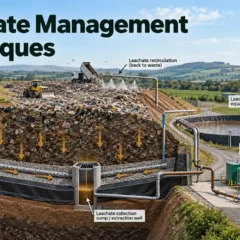
Leachate Management Techniques for Landfills: Practical UK Guide
A practical guide to landfill leachate management techniques, covering minimisation, extraction, recirculation, storage, treatment and disposal.
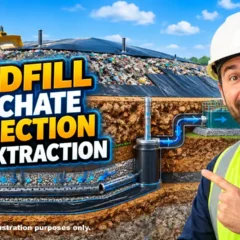
Landfill Leachate Collection and Extraction
Landfill leachate collection and extraction explained, including extraction wells, boreholes, side-slope risers, pumps, pipework, monitoring, settlement and modern Environment Agency requirements.
MBR Leachate Treatment System Pricing: Features, Capacity, and Operating Costs Compared
MBR leachate treatment systems have similar capital costs to FBBRs, but operating costs run higher at $10 per 1,000 gallons treated. While MBR systems boast superior effluent quality and TSS removal, understanding the long-term savings, particularly in sludge disposal, reveals their true value over time…

Leachate Collection System Pricing: HDPE Pipe, Pumps, and Design Costs Explained
Understanding leachate collection system pricing is crucial as costs vary widely, from $500,000 to over $3 million. Influencing factors include pipe diameter, pump type, and design complexities. Accurate estimates rely on detailed hydraulic modeling, not guesses, to avoid costly surprises during landfill development and operation…

Leachate Treatment Plant Pricing: Setup, Operating, and Long-Term Costs Explained
Leachate management can consume 20–30% of a landfill’s operations budget. On-site treatment is often cost-effective, with technology choice impacting costs. MBR with reverse osmosis costs $0.064–$0.095 per gallon. Site conditions and emerging contaminants like PFAS also reshape budgets, making strategic planning essential…
Reverse Osmosis vs. Evaporation for Leachate Volume Reduction: Performance and Cost Compared
Reverse osmosis and vacuum evaporation lead in leachate volume reduction. Evaporation preps RO treatment, enhancing efficiency. Lab tests show pollutant concentration with minimal transfer to distillate. Incorrect choices increase costs and risks, but combining both methods offers a comprehensive solution…
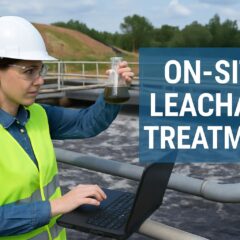
On-Site vs. Off-Site Leachate Treatment: Cost, Compliance, and Feasibility Compared
On-site leachate treatment excels in cost and health outcomes when PFAS exceeds 1,666 ng/L, challenging off-site POTW solutions. With tightening PFAS regulations and varying treatment options, landfills must adapt swiftly. Assessing cost per PFAS gram reveals crucial insights for compliance and sustainability in this evolving landscape…
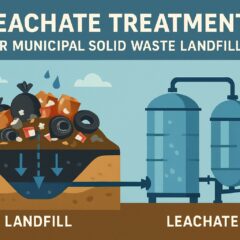
Biological vs. Chemical Leachate Treatment for Municipal Solid Waste Landfills: What Works Best
Landfill leachate is a complex wastewater requiring targeted treatment. Biological methods excel with biodegradable waste, while chemical processes handle heavy metals and recalcitrant organics. The best approach combines both to meet regulatory thresholds effectively, considering factors like leachate age and landfill stage for optimal results…
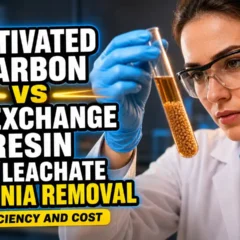
Activated Carbon vs. Ion Exchange Resin for Leachate Ammonia Removal: Efficiency and Cost
Ion exchange resins outperform activated carbon in ammonia leachate removal but at a cost. Zeolite is more economical, while activated carbon tackles both ammonia and organics. Choosing the right method hinges on leachate characteristics and treatment goals, making ion competition and cost crucial considerations…