


- MBR leachate treatment systems typically carry capital costs similar to fixed-bed bioreactors (FBBRs), but operating costs can run nearly double — around $10 per 1,000 gallons treated.
- A 175,000 GPD FBBR system treating leachate at 4,000 mg/L BOD carries a capital cost of approximately $2.5M, giving you a useful baseline for MBR comparison.
- MBR systems consistently outperform conventional systems on effluent quality, TSS removal, and long-term sludge disposal costs — which can account for up to 50% of OPEX in traditional plants.
- Moving bed bioreactors (MBBRs) offer roughly 20% lower capital costs than FBBRs but come with approximately 25% higher operating costs — a trade-off MBR buyers should understand before choosing a system.
- The real case for MBR leachate systems isn’t just the purchase price — keep reading to see where the long-term savings actually come from.
MBR Leachate Treatment Costs Are Not What Most Buyers Expect
Most facilities get the sticker shock backwards — they fixate on MBR capital costs and miss where the real financial story unfolds over time.
Leachate is one of the most chemically complex waste streams a treatment system will ever handle. It contains high concentrations of ammonia, heavy metals, dissolved organics, and recalcitrant compounds that shift in composition depending on landfill age, waste type, and seasonal conditions. That variability is exactly why membrane bioreactor (MBR) technology has become a go-to solution for landfill operators who need consistent, permit-compliant effluent without the unpredictability of conventional biological treatment. For businesses evaluating wastewater infrastructure, understanding the full cost picture of an MBR leachate treatment system is the difference between a smart capital decision and an expensive mistake.
Upfront pricing for MBR systems can look steep compared to activated sludge basins or stabilisation ponds. But when you factor in sludge disposal, energy optimisation, footprint savings, and effluent reuse potential, the numbers shift significantly. The goal of this breakdown is to give you a precise, honest look at what MBR leachate systems actually cost — and why those costs are structured the way they are.
What Drives MBR Leachate Treatment System Pricing
No two MBR leachate systems are priced the same, and that’s not a sales tactic — it’s an engineering reality. Leachate composition alone can vary enough between two landfills to push system design in completely different directions. Here are the four primary variables that shape pricing from the ground up.
System Capacity and Flow Rate Requirements
Flow rate is the single biggest cost lever in MBR system design. Higher daily volumes require more membrane surface area, larger biological reactors, and more robust aeration infrastructure — all of which scale costs upward in a non-linear way. A system designed for 50,000 GPD is not simply half the cost of a 100,000 GPD system. Engineering, permitting, and auxiliary equipment often represent fixed costs that don’t compress proportionally with flow reduction.
Membrane Type: Hollow Fiber vs. Flat Sheet
Hollow fiber membranes are generally lower in upfront cost and are widely used in municipal-scale MBR applications. Flat sheet membranes, while more expensive per unit, offer easier physical cleaning and can perform better in high-solids leachate environments where fouling is an accelerated risk. The choice between the two affects not just capital expenditure but long-term maintenance frequency and membrane replacement intervals — both of which feed directly into your total cost of ownership.
Pretreatment and Post-Treatment Requirements
Leachate with extremely high ammonia loads or heavy metal concentrations may require upstream equalization, pH adjustment, or chemical precipitation before it ever reaches the MBR. On the discharge side, certain regulatory thresholds demand reverse osmosis (RO) or advanced oxidation as a polishing step after the MBR. Each of these additions layers cost onto the base system price and must be scoped accurately during the feasibility stage.
Site-Specific Installation Complexity
Remote landfill locations, difficult soil conditions, extreme climate requirements, and limited utility infrastructure all drive installation costs higher. A containerized MBR system installed on a flat, serviced industrial site will cost meaningfully less than a custom civil build on a remote landfill with no existing power or water connections. Site assessment is not optional — it’s a core pricing input.

“Membrane bioreactor – Wikipedia” from en.wikipedia.org and used with no modifications.
MBR Capital Costs vs. Conventional Leachate Treatment Systems
To price an MBR system accurately, you need a direct comparison against the alternatives. Capital costs don’t exist in a vacuum — they only make sense when measured against what else that budget could buy and what performance trade-offs come with those alternatives.
MBR vs. SBR Capital Cost Comparison
Sequencing batch reactors (SBRs) are one of the most common comparators when evaluating MBR systems for leachate treatment. A detailed cost analysis of a 0.275 MGD facility showed MBR operating costs running 13% lower than the SBR prior to any optimization, and 19% lower following optimization of both solids handling and membrane performance. On the capital side, MBR systems at this scale are competitive with SBRs — and when you account for the superior effluent quality MBRs consistently produce, the value equation tilts further in MBR’s favor.
MBR vs. FBBR Capital Cost Comparison
Fixed-bed bioreactors (FBBRs) are a useful benchmark because they represent a mid-tier technology with well-documented costs. A 175,000 GPD FBBR system designed to treat leachate at 4,000 mg/L BOD — processing approximately 2,600 kg/day BOD at 90% removal efficiency — carries a capital cost of approximately $2.5M, inclusive of engineering, key equipment, and auxiliary systems. MBR systems at comparable capacity carry similar capital costs due to the offset between their smaller physical footprint and the higher auxiliary costs associated with the membrane system itself. For more detailed insights, you can explore leachate treatment plant pricing.
Where the gap opens up is in operating costs. MBRs treating leachate at this scale run approximately $10 per 1,000 gallons treated — roughly double the FBBR operating cost. That premium is driven by membrane aeration energy demands, periodic chemical cleaning requirements, and eventual membrane replacement. Understanding this trade-off is critical: the MBR delivers better effluent quality and a smaller footprint, but it does so at a higher operational cost than an FBBR.
Why Smaller Footprint Does Not Always Mean Lower CAPEX
It’s a common assumption that a more compact system should cost less to build. With MBRs, that logic breaks down. The membrane cassettes, blowers, permeate pumps, and control systems required to operate an MBR in a smaller physical envelope add auxiliary capital costs that can offset the civil construction savings from reduced tankage. The footprint advantage is real and valuable — particularly on constrained landfill sites — but it should be understood as a site benefit rather than a direct capital cost reduction.

“Membrane bioreactor – Wikipedia” from en.wikipedia.org and used with no modifications.
MBR Leachate Treatment Operating Costs Broken Down
Capital cost is a one-time event. Operating costs run for the life of the system — often 20 years or more — which means even small per-unit cost differences compound into major financial impacts over time. Here’s where MBR leachate treatment OPEX actually goes.
The four primary operating cost categories for MBR leachate systems are energy, membrane maintenance, chemicals and sludge disposal, and labor. Each category carries a different weight depending on system scale and leachate characteristics, and each offers specific optimisation opportunities that well-designed systems should be engineered to exploit from day one. For more information on cost considerations, explore our detailed guide on leachate treatment plant pricing.
Energy Consumption and Aeration Costs
- Membrane aeration (coarse bubble scouring) typically accounts for the largest share of MBR energy consumption
- Biological aeration for the activated sludge process runs continuously and adds to baseline energy draw
- Permeate pumping, mixers, and control systems contribute secondary but consistent energy loads
- Energy optimization through intermittent aeration cycling can meaningfully reduce overall consumption
Aeration is the dominant energy cost in any MBR system, and leachate applications push that demand higher than typical municipal installations. The membrane scouring process — which uses coarse bubble aeration to prevent fouling on membrane surfaces — runs continuously and cannot be eliminated without accelerating membrane degradation. In high-strength leachate with elevated suspended solids, scouring demand increases further, making aeration system design one of the most consequential engineering decisions in the entire project.
That said, aeration costs are not fixed. Modern MBR designs incorporate intermittent aeration cycling, variable frequency drives (VFDs) on blowers, and dissolved oxygen (DO) control systems that reduce energy consumption without compromising membrane performance. These optimizations are not add-ons — they should be standard expectations in any competitively priced MBR leachate system.
When benchmarking energy costs across system types, MBBRs — which require mixing air for media suspension in addition to biological aeration — carry operating costs approximately 25% higher than FBBRs at around $6.25 per 1,000 gallons treated. MBR systems, while more energy-intensive than MBBRs in some configurations, deliver a substantially higher effluent quality that often eliminates the need for downstream polishing steps, which recaptures some of that energy cost difference at the system level.
Membrane Maintenance and Replacement Costs
Membrane maintenance is a predictable and plannable cost — which is actually one of its advantages over the unpredictable failure costs of conventional mechanical treatment components. Routine maintenance involves periodic chemical cleaning using sodium hypochlorite and citric acid solutions to remove biological fouling and mineral scaling from membrane surfaces. Maintenance cleaning cycles typically occur weekly or biweekly in leachate applications, while recovery cleans — more intensive chemical soaks — are performed quarterly or as flux decline warrants. Membrane replacement intervals vary by manufacturer, operating conditions, and leachate chemistry, but most hollow fiber and flat sheet membrane systems in leachate service are designed for 5 to 10 year replacement cycles. Replacement membrane cassettes represent a capital expenditure that must be budgeted as part of long-term system ownership — and operators who account for this from day one avoid the budget surprises that derail facility finances mid-operation.
Chemical Usage and Sludge Disposal Costs
Chemical costs in MBR leachate systems span two distinct functions: process chemicals for biological treatment optimization (pH adjustment, nutrient dosing, antifoam) and cleaning chemicals for membrane maintenance. Sludge disposal is where MBR systems begin to demonstrate a clear financial advantage over conventional alternatives. Traditional activated sludge plants can see sludge disposal accounting for up to 50% of total OPEX — a staggering figure driven by dewatering, hauling, tipping fees, and regulatory handling requirements. MBR systems operate at higher mixed liquor suspended solids (MLSS) concentrations, which reduces overall sludge production volumes and cuts disposal frequency and cost by 30 to 50% compared to conventional systems. Over a 20-year system life, that reduction translates into millions of dollars in avoided disposal costs depending on system scale and local hauling rates.
Labor Costs and Preventative Maintenance Savings
MBR leachate systems are more automated than conventional treatment alternatives, which reduces the labor hours required for routine operation. Automated membrane cleaning sequences, remote monitoring capability, and PLC-based process control mean that a single trained operator can manage system performance without constant on-site presence. Preventative maintenance — scheduled membrane inspections, blower servicing, pump seal replacements — is straightforward to plan and budget, and it eliminates the reactive maintenance costs that drive labor expenses unpredictably higher in less automated systems. For more information, explore leachate collection system pricing to understand the cost benefits.

“Membrane bioreactor – Wikipedia” from en.wikipedia.org and used with no modifications.
How System Capacity Affects Total Pricing
Capacity is the most direct driver of MBR leachate system pricing, but the relationship is not proportional. As flow increases, economies of scale begin to reduce the per-gallon capital cost — but only up to a point where system complexity and redundancy requirements introduce new cost layers. Understanding where your required capacity sits on that curve is essential for budgeting accurately. For further insights on related costs, you might want to explore leachate treatment plant pricing.
Leachate generation rates at landfill sites are rarely static. Seasonal rainfall, waste decomposition stages, and site expansion all affect leachate volumes over time. A well-engineered MBR system should be sized not just for current flows but for projected peak flows — and ideally designed with modular expansion capability so that capacity additions don’t require full system replacement.
Small-Scale Systems: Under 0.1 MGD
Small-scale MBR leachate systems serving flows under 0.1 MGD are commonly deployed at newer or smaller landfill cells where leachate generation is limited but regulatory discharge requirements are no less stringent. These systems are frequently packaged or containerized, which reduces civil construction costs and accelerates deployment timelines. Capital costs at this scale are heavily influenced by the fixed engineering and control system costs that don’t compress with flow — meaning per-gallon capital costs are highest in this range.
Containerized MBR systems under 0.1 MGD can be sourced as complete skid-mounted packages, which simplifies procurement and reduces on-site installation complexity. The trade-off is that packaged systems offer less process customization than engineered-to-order designs, which can become a limitation if leachate chemistry is particularly complex or if discharge standards are unusually stringent.
Mid-Range Systems: 0.1 to 1 MGD
The 0.1 to 1 MGD range is where MBR leachate systems deliver some of their strongest value. This capacity band covers the majority of active municipal and commercial landfill sites and aligns well with MBR’s core performance advantages — consistent effluent quality, manageable sludge volumes, and modular scalability. Capital costs in this range scale more favorably on a per-gallon basis than smaller systems, and the operating cost premium over conventional alternatives begins to be offset by sludge disposal savings and reduced downstream treatment requirements. The 0.275 MGD case study comparing MBR to SBR — where MBR delivered 19% lower operating costs post-optimization — falls squarely in this capacity range and represents a realistic performance benchmark for systems in this tier.
Large-Scale Systems: Over 1 MGD
Large-scale MBR leachate systems above 1 MGD are typically engineered-to-order projects serving major regional landfills or multi-cell facilities with high sustained leachate volumes. At this scale, capital costs are substantial but per-gallon costs become more competitive, and the operational savings from sludge reduction, water reuse, and automated process control compound significantly. Redundancy requirements — standby membrane trains, backup blowers, dual permeate pump configurations — add capital cost but are non-negotiable for continuous regulatory compliance at high-volume discharge sites. For more detailed insights, you can explore MBT leachate management treatment options.
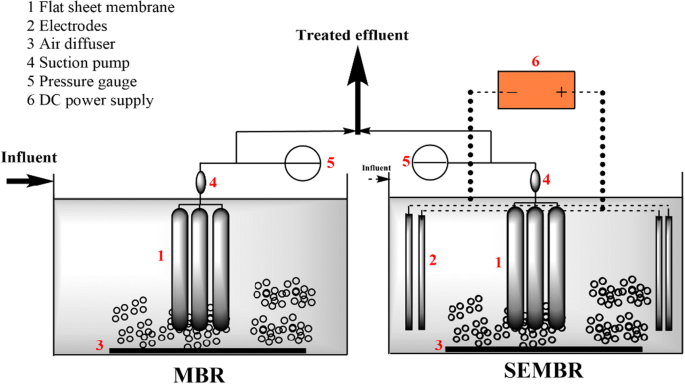
“Effective leachate treatment by a pilot-scale submerged electro-membrane bioreactor | Environmental Science and Pollution Research | Springer Nature Link” from link.springer.com and used with no modifications.
Where MBR Systems Save Money Over Time
The financial case for MBR leachate treatment isn’t built on capital cost alone — it’s built on the cumulative savings that accrue over years of operation. Three areas in particular consistently deliver measurable financial return that conventional systems struggle to match.
Biosolids Reduction and Residuals Management Savings
MBR systems operate at elevated MLSS concentrations — typically 8,000 to 15,000 mg/L compared to 2,000 to 4,000 mg/L in conventional activated sludge systems. This higher biomass concentration means the system processes more organic load per unit volume and produces proportionally less waste sludge. When sludge disposal costs represent up to half of conventional treatment OPEX, a 30 to 50% reduction in sludge production volumes delivers immediate, recurring savings that accumulate year over year. For high-volume leachate sites where sludge hauling is a weekly operational reality, this single factor can shift the lifetime cost comparison decisively in MBR’s favor.
Permeate Reuse and Potable Water Cost Reduction
MBR permeate — the treated effluent that passes through the membrane — is consistently high quality, with near-complete removal of suspended solids and significant reductions in BOD, COD, and pathogen loads. At sites where treated water can be reused for dust suppression, leachate recirculation, or on-site industrial processes, MBR permeate quality is often sufficient without additional polishing. This reuse capability directly reduces potable or process water procurement costs and can offset a meaningful portion of operating expenditure at sites with high water demand. For more information on how this technology compares with other methods, check out this article on reverse osmosis vs evaporation.
Regulatory Compliance and Effluent Quality Benefits
Meeting discharge standards for leachate is not optional — permit violations carry fines, remediation costs, and operational shutdowns that dwarf the cost difference between treatment technologies. MBR systems produce effluent that routinely meets or exceeds stringent discharge limits for BOD, TSS, ammonia, and fecal coliform without the process variability that makes conventional biological systems vulnerable to compliance exceedances. The cost of a single significant permit violation — enforcement action, third-party remediation, legal exposure — can easily exceed the lifetime operating cost premium of an MBR system over a conventional alternative. Compliance certainty is not a soft benefit; it is a quantifiable financial risk reduction.
Key Features That Justify Higher Upfront MBR Costs
The upfront cost of an MBR leachate system is real — but so is the performance gap between MBR technology and every conventional alternative it replaces. Three specific technical advantages consistently justify the capital premium for facilities that evaluate total system value rather than purchase price alone.
Buyers who focus exclusively on capital cost comparisons are essentially evaluating cars by sticker price without considering fuel economy, maintenance intervals, or reliability records. MBR systems are engineered to deliver performance outcomes that conventional systems physically cannot match — and those outcomes carry direct financial value that offsets the higher upfront investment across the system’s operating life.
The most meaningful cost justifications fall into three categories: effluent quality, design scalability, and physical footprint. Each one addresses a distinct operational or regulatory challenge that leachate treatment facilities face, and each one delivers financial value that compounds over time.
- Consistently high effluent quality reduces or eliminates downstream polishing treatment requirements
- Modular design enables capacity expansion without full system replacement
- Compact footprint reduces civil construction costs and preserves valuable landfill airspace
- Higher MLSS concentrations cut sludge production and disposal frequency
- Automated process control reduces labor dependency and reactive maintenance costs
Effluent Quality and TSS Removal Performance
MBR membranes provide an absolute physical barrier to suspended solids, producing permeate with total suspended solids (TSS) concentrations that are consistently below 1 mg/L — compared to 20 to 30 mg/L in well-operated conventional clarifier-based systems. For leachate treatment specifically, this level of TSS removal is not just a quality metric — it directly determines whether the treated effluent can be discharged to surface water, sewer, or reused on-site without additional treatment. Biological oxygen demand (BOD) removal in MBR systems routinely achieves greater than 98% efficiency, and ammonia removal through nitrification is highly stable even under variable leachate loading conditions. That consistency is what permits and regulatory agencies require — and what conventional biological systems frequently fail to deliver during upset conditions or seasonal leachate strength variations.
Modular and Scalable Design for Future Capacity
Leachate volumes at active landfills are a moving target. As waste mass increases, decomposition accelerates, and seasonal rainfall events intensify, leachate generation rates grow — sometimes significantly — over the operational life of a site. MBR systems designed with modular membrane configurations allow facilities to add membrane cassettes or biological reactor volume incrementally, matching treatment capacity to actual leachate generation without the capital disruption of building an entirely new system.
This scalability has a direct pricing implication: a well-scoped MBR system purchased today can accommodate tomorrow’s capacity requirements at a fraction of the cost of a full replacement. The alternative — purchasing a conventional system sized conservatively for current flows and replacing it when volumes grow — frontloads capital expenditure at the worst possible time and eliminates the operational continuity advantage that modular MBR designs provide.
Compact Footprint in Space-Constrained Sites
Landfill sites are not known for surplus space. Every square meter of land used for leachate treatment infrastructure is land that cannot be used for waste disposal — which has a direct and quantifiable impact on site economics. MBR systems require significantly less physical footprint than activated sludge basins, stabilisation ponds, or SBR systems of equivalent treatment capacity, primarily because high-MLSS operation allows smaller biological reactor volumes to handle the same organic loading. For more information on different leachate management treatment options, explore our resources.
At sites where real estate constraints are a genuine operational limitation, the footprint advantage of an MBR system can be the deciding factor — not just for convenience, but for regulatory compliance with landfill airspace management requirements. The civil construction savings from reduced tankage and site preparation, combined with the preserved airspace value, represent a tangible financial offset against the MBR capital cost premium that is specific to landfill site applications and rarely captured in generic technology cost comparisons.
MBR Leachate System Pricing Is Justified by Long-Term Performance
MBR leachate treatment systems cost more to operate per thousand gallons than fixed-bed bioreactors — approximately $10 versus $5 per 1,000 gallons treated — but that per-unit cost comparison tells only part of the story. The full financial picture includes 30 to 50% lower sludge disposal costs, consistently permit-compliant effluent that eliminates downstream polishing in many applications, and modular scalability that protects capital investment as site conditions evolve. When those factors are quantified over a 15 to 20-year system life, the operating cost premium frequently inverts into a net cost advantage over conventional alternatives.
For landfill operators and industrial facility managers making long-term infrastructure decisions, the question is never simply “what does this system cost to buy?” — it’s “what does this system cost to own, operate, and defend against regulatory risk over its entire service life?” On that measure, MBR technology built specifically for leachate treatment has a well-documented and compelling answer.
Frequently Asked Questions
The following answers address the most common pricing and performance questions for MBR leachate treatment systems, based on documented system performance data and engineering benchmarks.
What is the average capital cost of an MBR leachate treatment system?
MBR leachate treatment system capital costs are closely comparable to FBBR systems at equivalent capacity. A 175,000 GPD FBBR treating leachate at 4,000 mg/L BOD carries a documented capital cost of approximately $2.5M inclusive of engineering and auxiliary systems — and MBR systems at similar capacity land in a comparable range, with the smaller physical footprint offset by higher auxiliary equipment costs associated with the membrane system. Small packaged systems under 0.1 MGD will be priced lower, while engineered systems above 1 MGD scale upward significantly based on site complexity, redundancy requirements, and pretreatment scope.
How do MBR operating costs compare to conventional leachate treatment systems?
MBR systems operate at approximately $10 per 1,000 gallons treated — roughly double the operating cost of an FBBR and approximately 25% higher than an MBBR on a per-gallon basis. However, MBR systems offset a significant portion of that premium through sludge disposal savings of 30 to 50% compared to conventional activated sludge systems, reduced downstream treatment requirements due to superior effluent quality, and lower labor costs from automated process control. A documented comparison of MBR versus SBR at a 0.275 MGD facility showed MBR operating 19% cheaper than the SBR following optimization of solids handling and membrane performance.
What capacity MBR system do I need for my landfill site?
System capacity sizing requires a site-specific leachate generation assessment that accounts for current daily flows, projected peak flows based on watershed area and annual rainfall, and anticipated leachate volume changes as the landfill progresses through operational phases. As a starting framework: sites under 0.1 MGD are well-served by packaged containerized MBR units; sites in the 0.1 to 1 MGD range should evaluate engineered modular systems with expansion capability; and sites above 1 MGD require custom-engineered solutions with built-in redundancy. Always size for peak flow conditions with a design safety factor — under-sizing an MBR leachate system creates compliance risk that far outweighs the capital savings from a smaller initial installation.
How often do MBR membranes need to be replaced and what does it cost?
In leachate treatment service, MBR membrane replacement intervals typically range from 5 to 10 years depending on membrane type, leachate chemistry, and how consistently maintenance cleaning protocols are followed. Hollow fiber membranes and flat sheet membranes carry different replacement cost profiles — flat sheet cassettes tend to be more expensive per unit but may last longer in high-fouling leachate environments due to easier physical cleaning access. Membrane replacement should be budgeted as a planned capital expenditure from day one of system ownership rather than treated as an unexpected cost, and operators should confirm replacement cassette pricing and availability with their system supplier before procurement to avoid future supply chain surprises.
Can MBR leachate treatment systems meet discharge standards without additional treatment?
In many leachate treatment applications, MBR systems produce effluent that meets discharge standards for BOD, TSS, ammonia, and fecal coliform without requiring downstream polishing. MBR permeate consistently achieves TSS below 1 mg/L and BOD removal above 98%, which satisfies most surface water and sewer discharge permit thresholds for these parameters. For further insights into biological vs. chemical leachate treatment options, explore more on this topic.
However, certain high-strength leachates — particularly from older, well-established landfill cells — contain recalcitrant dissolved organic compounds, specific heavy metals, or elevated total dissolved solids (TDS) that biological MBR treatment alone cannot adequately address. In these cases, a downstream reverse osmosis (RO) stage or advanced oxidation process (AOP) may be required to achieve full permit compliance.
The determination of whether standalone MBR treatment is sufficient should be made based on a detailed characterization of the leachate stream against the specific permit discharge limits at your site. A leachate treatability study — which tests actual site leachate against the proposed treatment process — is the most reliable way to confirm whether MBR alone meets compliance requirements or whether a combined MBR-plus-polishing system is warranted before committing to a full system design.
For businesses and landfill operators looking to make the right long-term infrastructure decision, partnering with specialists who understand both the engineering and the economics of MBR leachate treatment is the most direct path to a system that performs reliably and costs what it should — visit tailored wastewater treatment solutions built for complex leachate challenges.