
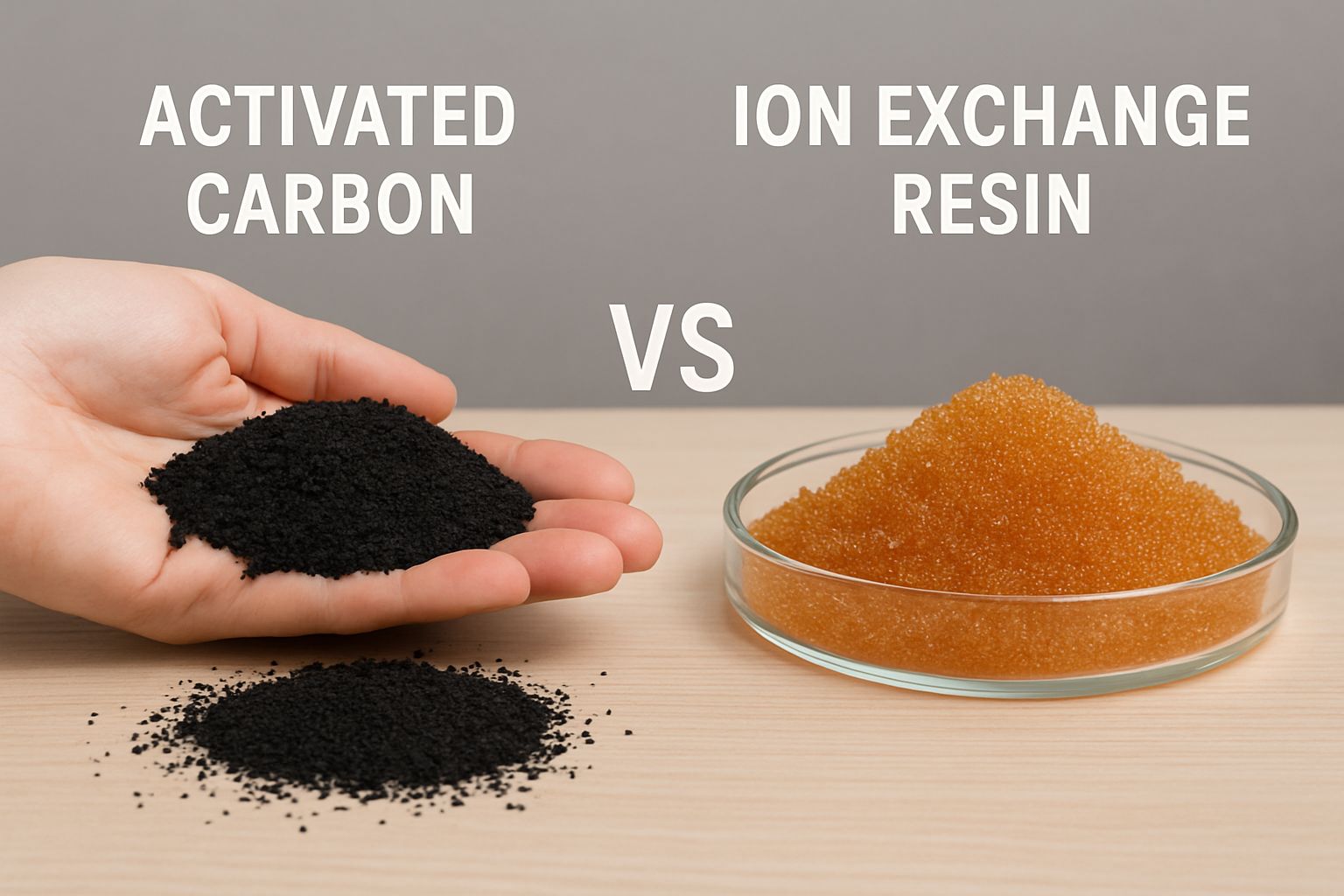
Ion exchange resins and activated carbon are both water treatment media that are used for leachate ammonia removal, but they work in distinct ways. Through adsorption, activated carbon uses a porous surface to capture organic compounds, chlorine, and unpleasant odours. Ion exchange resin is perfect for softening water and eliminating minerals or inorganic ions since it exchanges charged ions using microscopic plastic beads.
Quick Insights in this Article:
- Ion exchange resins consistently outperform activated carbon in raw adsorption capacity for ammonia removal from leachate, but competing cations in real wastewater can slash that capacity by up to 80%.
- Zeolite remains the most cost-effective adsorbent at 199 g NH4-N/$ compared to ion exchange resin at just 6 g NH4-N/$, making material selection a critical financial decision.
- Activated carbon offers a dual benefit — it removes both ammonia and organic contaminants simultaneously, which can make it the smarter choice for certain leachate profiles.
- Lab-scale cost estimates for ion exchange resin treatment sit at approximately $1.78/m³, but pilot-scale results will almost always look different.
- Choosing between these two methods comes down to your leachate’s strength, competing ion composition, and whether ammonia recovery or simple removal is the goal.
Leachate ammonia doesn’t respond well to one-size-fits-all treatment — and picking the wrong removal method can mean spending more money for worse results. Facilities focused on optimising leachate management can explore resources from experts in waste management systems to better align their treatment approach with real-world leachate conditions.
What Makes Leachate Ammonia So Difficult to Remove
Landfill leachate is one of the most chemically complex wastewaters generated by any municipal operation. Unlike industrial effluents with predictable compositions, leachate changes character depending on the age of the landfill, waste composition, rainfall infiltration, and decomposition stage. That variability makes designing a reliable ammonia removal system genuinely challenging.
Why Ammonia Concentrations in Leachate Are Exceptionally High
Ammonia nitrogen (NH3-N) accumulates in leachate primarily through the biological degradation of nitrogen-containing organic compounds in buried waste — proteins, urea, and amino acids all break down into ammonium ions over time. Concentrations can range from a few hundred milligrams per litre in young, actively decomposing landfills to several thousand mg NH4-N/L in mature, stabilised sites. Research testing ion exchange resin performance has used initial concentrations as high as 3,000 mg NH4-N/L to simulate these worst-case conditions. At those levels, standard biological treatment alone is rarely sufficient.
How Competing Cations Complicate Any Removal Method
Leachate is never just ammonia dissolved in water. It carries a complex mix of competing cations — potassium (K?), calcium (Ca²?), magnesium (Mg²?), and sodium (Na?) — all competing for the same binding sites on any adsorbent material. This competition directly reduces how much ammonia an adsorbent can actually capture under real conditions versus controlled laboratory testing. Understanding this gap between lab capacity and field performance is critical before committing to any treatment design.
How Activated Carbon Removes Ammonia From Leachate
Activated carbon works through a combination of physical adsorption and surface chemistry. Its enormous internal surface area — typically ranging from 500 to 1,500 m²/g — provides vast space for contaminant molecules to attach. For ammonia removal specifically, both the physical pore structure and the presence of surface functional groups play important roles.
The Role of Surface Area and Functional Groups
Ammonia adsorption onto activated carbon occurs primarily through electrostatic interactions and weak van der Waals forces, rather than the stronger ionic exchange mechanisms used by zeolites or dedicated resins. Acidic surface functional groups on the carbon — carboxyl and lactone groups in particular — can attract positively charged ammonium ions (NH4?) at lower pH values. However, this attraction is relatively weak compared to purpose-built cation exchange materials. The average maximum adsorption capacity for activated carbon across key studies sits at approximately 21.4 mg NH4-N/g, which is notably lower than zeolite (40.6 mg NH4-N/g) and ion exchange resin (31.2 mg NH4-N/g).
Simultaneous Removal of Ammonia and Organic Contaminants
Where activated carbon genuinely earns its place in leachate treatment is its ability to target multiple contaminants at once. Leachate carries significant loads of dissolved organic matter, humic substances, color compounds, and trace organics alongside ammonia — and activated carbon adsorbs all of these simultaneously. Studies on semi-aerobic stabilized leachate have confirmed that activated carbon can remove both ammonia nitrogen and color in a single treatment step. This dual-action capacity can simplify treatment trains and reduce overall system complexity, especially for leachates where organic loading is a co-concern alongside nitrogen.
Where Activated Carbon Falls Short for High-Strength Leachate
The core weakness of activated carbon for ammonia removal is its cost-normalized performance. At 11 g NH4-N/$ compared to zeolite’s 199 g NH4-N/$, activated carbon is a significantly more expensive option per unit of ammonia removed. When leachate ammonia concentrations climb into the thousands of mg/L range, the volume of activated carbon required becomes economically impractical for standalone ammonia treatment. It makes more sense as part of a polishing stage or combined system rather than the primary ammonia removal technology in high-strength leachate scenarios.
How Ion Exchange Resins Remove Ammonia From Leachate
Ion exchange resins remove ammonia through a direct chemical exchange — ammonium ions (NH4?) in solution displace other cations (typically sodium or hydrogen ions) from fixed charged sites on the resin matrix. This mechanism is more selective and more efficient for ammonium capture than the surface adsorption process used by activated carbon, which is why resins consistently show higher adsorption capacities in controlled studies.
The resin matrix itself is a synthetic polymer — typically a sulfonated polystyrene-divinylbenzene structure for strong acid cation (SAC) resins — with functional groups engineered specifically for ion capture. The performance of any given resin depends heavily on the type and density of these functional groups, the resin’s physical structure, and the pH of the solution being treated.
| Resin Name | Type | Initial NH4-N Concentration | Max Adsorption Capacity |
|---|---|---|---|
| Amberjet 1200 Na | SAC (-SO3? groups) | Wastewater conditions | High capacity, competitive |
| Amberlite IR120H | SAC | 3,000 mg NH4-N/L | 27 mg NH4-N/g |
| Amberlite IR120Na | SAC | 70 mg NH4-N/L | Tested in synthetic wastewater |
| Purolite SSTC60 | SAC | 70 mg NH4-N/L | Tested in synthetic wastewater |
| Amberlyst 15wet | SAC | Synthetic wastewater | Higher capacity vs. WAC types |
| Lewatit VPOC1800 | SAC | Synthetic wastewater | Higher capacity vs. WAC types |
What the data across these studies consistently shows is that SAC resins outperform weak acid cation (WAC) resins for ammonium adsorption, particularly in the acidic to neutral pH ranges typical of leachate. The sulfonate functional groups (-SO3?) maintain their negative charge across a broader pH range, keeping binding sites available even as leachate chemistry fluctuates.
Strong Acid Cation Resins vs. Weak Acid Cation Resins
The distinction between SAC and WAC resins is not just technical — it has direct operational consequences for leachate treatment. SAC resins carry sulfonate groups that remain ionised (negatively charged) across virtually the entire pH spectrum, meaning they maintain consistent ammonium capture regardless of pH swings in the leachate. WAC resins use carboxylate groups (-COO?) that only become active above approximately pH 6 to 7 — below that threshold, they lose much of their exchange capacity. Since leachate pH can vary considerably depending on landfill age and seasonal conditions, SAC resins offer far more operational reliability for this specific application.
Adsorption Capacity: What the Data Actually Shows
Across multiple studies, the average maximum adsorption capacity for ion exchange resins lands at approximately 31.2 mg NH4-N/g — placing them second only to zeolite (40.6 mg NH4-N/g) among common adsorbents. The Amberlite IR120H resin tested by Ding and Sartaj (2016) achieved 27 mg NH4-N/g treating synthetic wastewater at an initial concentration of 3,000 mg NH4-N/L. That’s a meaningful result, but it comes with an important caveat: synthetic wastewater doesn’t contain the complex competing ion matrix found in real landfill leachate, which consistently reduces real-world performance.
How Fast Ion Exchange Resins Reach Equilibrium
Equilibrium time — the point at which the resin is no longer capturing additional ammonia — directly determines how large a treatment system needs to be. Faster equilibrium means smaller contact vessels and lower capital costs. SAC resins generally reach equilibrium faster than WAC resins because their permanently charged functional groups don’t require pH-dependent activation before binding begins.
In practical terms, the contact time required in a column system depends on flow rate, resin bed depth, and the initial ammonia concentration in the leachate. Higher ammonia concentrations drive faster initial uptake due to the steeper concentration gradient, but the resin exhausts more quickly at those levels too — meaning regeneration cycles become more frequent and operational costs rise accordingly. For more detailed insights, you can refer to this study on resin performance.
Resin Regeneration and Repeated Use Potential
One of the strongest arguments for ion exchange resins in leachate treatment is their regeneration potential. Once exhausted, SAC resins can typically be regenerated using a concentrated solution of sodium chloride (NaCl) or hydrochloric acid (HCl), which displaces the captured ammonium ions and restores the resin’s exchange capacity. This regeneration cycle can be repeated multiple times, significantly improving the long-term economics of resin-based systems compared to single-use adsorbents.
That said, the literature notes a meaningful gap in research: comprehensive assessments of structural stability across extended adsorption-regeneration cycles remain limited. Resin degradation over dozens or hundreds of cycles in harsh leachate conditions — high ionic strength, variable pH, organic fouling — is not yet well characterized at field scale. This is an important consideration when projecting system lifespan and total cost of ownership.
How Competing Cations Slash Ion Exchange Resin Efficiency
The single biggest performance gap between lab results and real leachate treatment is the presence of competing cations. In controlled studies using synthetic wastewater with only ammonium as the target ion, resins perform at their rated capacity. In actual leachate, they don’t — because every other positively charged ion in solution is competing for the same binding sites.
Potassium, Calcium, and Magnesium: The Main Culprits
Potassium (K?), calcium (Ca²?), magnesium (Mg²?), and sodium (Na?) are consistently present in landfill leachate at concentrations that directly compete with ammonium for resin exchange sites. Calcium and magnesium are divalent ions, meaning they carry a 2+ charge — and many SAC resins have a thermodynamic preference for divalent ions over the monovalent NH4?. This selectivity works against ammonia removal in leachate applications, as the resin can end up preferentially capturing calcium and magnesium while allowing ammonium to pass through partially untreated.
An 80% Capacity Drop: What Real Wastewater Does to Lab Results
The performance gap between synthetic and real wastewater testing is not marginal — it can be dramatic. Research has documented effective ammonium adsorption capacity dropping by as much as 80% when moving from clean synthetic solutions to actual wastewater containing a full complement of competing ions. This means a resin rated at 27 mg NH4-N/g under lab conditions could realistically deliver as little as 5 to 6 mg NH4-N/g in field conditions without pre-treatment to address the competing ion load. Designing a treatment system around lab-scale capacity figures without accounting for this drop is one of the most common and costly mistakes in leachate treatment planning.
Pre-Treatment Strategies to Protect Resin Performance
The most effective way to protect ion exchange resin performance in real leachate applications is to reduce the competing cation load before the leachate ever contacts the resin. Softening pre-treatment — using lime addition or a dedicated softening stage — can selectively precipitate calcium and magnesium out of solution, reducing competition for exchange sites and significantly improving effective ammonia capture. Reducing the concentration of competing cations prior to ammonium adsorption is identified in the research literature as a critical design consideration, not an optional enhancement.
Other pre-treatment approaches worth considering include pH adjustment to optimise resin performance and coagulation-flocculation to reduce suspended solids and organic fouling that can physically block resin pores. The right pre-treatment combination depends heavily on the specific leachate composition at your site — which is another reason why pilot-scale testing with actual leachate is essential before finalising any system design.
The Real Cost of Ion Exchange Resin Treatment
Cost is where the practical conversation around ion exchange resin treatment gets complicated. The adsorption performance data is compelling in controlled settings, but the economics of real-world leachate treatment involve far more variables than a laboratory feasibility study can fully capture.
Lab-Scale Cost Estimate: $1.78 per Cubic Meter
A feasibility study on ion exchange resin-based ammonium removal estimated the treatment cost at approximately $1.78/m³ of wastewater treated. That figure comes from laboratory-scale research and reflects idealized conditions — synthetic wastewater, controlled flow rates, and a resin operating closer to its rated capacity than it would in real leachate.
For context, that cost estimate doesn’t account for the pre-treatment stages that real leachate almost certainly requires — softening, pH adjustment, solids removal — each of which adds capital and operating costs to the overall system. It also doesn’t factor in the reduced effective capacity caused by competing cations, which means more resin volume (and more regenerant chemical consumption) is needed to achieve the same treatment outcome.
The cost-normalised adsorption capacity comparison across adsorbent types is particularly revealing when making material selection decisions:
Adsorbent Avg. Max Adsorption Capacity (mg NH4-N/g) Cost-Normalized Capacity (g NH4-N/$) Zeolite 40.6 199 Ion Exchange Resin 31.2 6 Biochar 30.2 30 Activated Carbon 21.4 11
The gap between ion exchange resin’s raw adsorption capacity (second highest) and its cost-normalised performance (lowest in the group at 6 g NH4-N/$) tells the real story. Resin materials are significantly more expensive per unit mass than zeolite or biochar, and that price premium doesn’t translate into proportionally better ammonia removal. The adsorption capacities of all four materials differ by less than a factor of two, yet the unit price varies by as much as 25 times — most notably between zeolite and ion exchange resin.
Why Pilot-Scale Testing Is Needed Before Committing
No lab-scale cost estimate, without the use of the site leachate, should ever be the basis for a full leachate treatment system investment. The variables that matter most — actual leachate composition, competing ion concentrations, seasonal variation, resin fouling rates, and regeneration frequency — can only be properly characterised through pilot-scale testing with real leachate from your specific site.
Key cost factors that lab estimates typically miss:
- Pre-treatment capital and operating costs (softening, pH adjustment, solids removal)
- Reduced effective resin capacity due to competing cations in real leachate
- Increased regenerant chemical consumption at real-world loading rates
- Resin replacement frequency under actual fouling and degradation conditions
- Brine disposal costs from regeneration waste streams
- Variability in leachate composition across seasons and landfill age
Pilot testing doesn’t need to be a years-long process. A well-designed column study running real leachate through a representative resin bed over several weeks can generate the breakthrough curves, regeneration performance data, and effective capacity figures needed to size a full-scale system with confidence.
The regeneration waste stream deserves particular attention in the cost analysis. Spent regenerant from ion exchange resin treatment is a concentrated ammonium brine — it requires further treatment or disposal, and that cost is rarely included in simplified feasibility estimates. In some cases, this stream can be processed for ammonia recovery and reuse as fertilizer, which partially offsets treatment costs, but that requires additional infrastructure investment. For more insights on cost implications, check out the huge savings made at leachate treatment plant.
The bottom line on cost: ion exchange resin is not the cheapest option per unit of ammonia removed, but it can be the right option when high removal efficiency, resin regenerability, and potential ammonia recovery are weighted appropriately against cost. The decision requires a full lifecycle cost analysis, not just a comparison of material prices or lab-scale estimates.
Activated Carbon vs. Ion Exchange Resin: Head-to-Head
With both methods examined in detail, a direct comparison across the criteria that actually matter for leachate treatment decision-making reveals a nuanced picture — neither method dominates across every dimension, and the right choice depends heavily on site-specific leachate characteristics.
Adsorption Capacity Compared Across Key Studies
The numbers across multiple studies tell a clear story. Ion exchange resins average 31.2 mg NH4-N/g maximum adsorption capacity versus activated carbon’s 21.4 mg NH4-N/g — a roughly 46% advantage in raw ammonia capture. The Amberlite IR120H resin specifically achieved 27 mg NH4-N/g when treating synthetic wastewater at 3,000 mg NH4-N/L, while SAC resins like Amberlyst 15wet and Lewatit VPOC1800 consistently outperformed weak acid cation alternatives in head-to-head comparisons by Vignoli et al. (2015).
But those figures come from synthetic wastewater — clean, controlled, and free of the competing cation interference that real leachate brings. When you account for the up-to-80% capacity reduction that real leachate conditions impose on ion exchange resins, the gap between the two methods narrows considerably. Activated carbon’s performance, while more modest in ideal conditions, tends to degrade less dramatically under real leachate’s complex chemistry because it doesn’t rely on the same selective ion exchange mechanism that competing cations disrupt.
Temperature Sensitivity and Operational Stability
One of the practical advantages of ion exchange resin systems is their operational consistency across temperature ranges. Research has documented that SAC resin performance remains consistent despite temperature fluctuations — an important operational characteristic for outdoor leachate treatment systems exposed to seasonal variation. This stability means resin-based systems can be designed without elaborate temperature control infrastructure, reducing both capital cost and operational complexity.
For more insights, explore the advantages and disadvantages of glass-fused-to-steel tanks used in similar treatment systems.
Activated carbon performance is generally also stable across typical environmental temperature ranges, but the regeneration process for spent activated carbon — typically thermal reactivation at very high temperatures — is significantly more energy-intensive and complex than the chemical regeneration used for ion exchange resins. This operational difference adds to activated carbon’s total cost of ownership in high-throughput leachate treatment applications, particularly where frequent regeneration is required due to high ammonia and organic loading.
Which Method Suits High-Strength vs. Low-Strength Leachate
For high-strength leachate — where ammonia nitrogen concentrations exceed 1,000 mg NH4-N/L and competing cation loads are significant — a pre-treated ion exchange resin system with SAC resins delivers the most reliable high-capacity ammonia removal when ammonia reduction is the primary treatment objective. The combination of superior adsorption capacity and regeneration potential makes resin systems the stronger technical choice at these concentrations, provided competing ions are addressed in pre-treatment. Zeolite remains the most cost-effective adsorbent at these concentrations, but its regeneration characteristics differ from synthetic resins.
Low-strength leachate — typically from older, more stabilised landfills where ammonia concentrations fall below a few hundred mg NH4-N/L — presents a different economic equation. At lower concentrations, the cost premium of ion exchange resin becomes harder to justify, and activated carbon becomes more competitive, especially when the leachate also carries significant organic contamination or colour that benefits from simultaneous removal in a single treatment step. The dual-action capability of activated carbon for both ammonia and organic removal can simplify the overall treatment train and reduce total system cost at these lower loading conditions.
Choosing the Right Method Comes Down to Your Leachate Profile
There is no universally superior method between activated carbon and ion exchange resin for leachate ammonia removal — the right answer is always site-specific. If your leachate carries high ammonia concentrations, you have the budget for pre-treatment to manage competing cations, and long-term ammonia recovery from regenerant streams is a viable option, SAC ion exchange resins offer the strongest technical performance. If your leachate is lower strength, carries heavy organic loading, or cost-normalised performance is the dominant concern, activated carbon — ideally in a polishing role or combined system — makes more practical sense. Either way, do not base your system design on lab-scale data alone. Run a pilot study with your actual leachate, characterise the competing ion matrix, and build your cost model from real performance data — not theoretical adsorption capacities measured in synthetic solutions. For more insights on leachate treatment, explore how to treat landfill leachate.
Frequently Asked Questions
The following questions address the most common points of confusion when evaluating leachate ammonia removal methods for real-world treatment applications.
What is the main difference between activated carbon and ion exchange resin for ammonia removal?
Activated carbon removes ammonia through physical adsorption and weak surface chemistry interactions, capturing ammonia alongside organic contaminants and colour compounds simultaneously. Ion exchange resins operate through a direct chemical exchange mechanism — ammonium ions displace other cations from fixed charged sites on the resin matrix — making them more selective and more efficient for targeted ammonia capture.
The practical implication of this difference is that activated carbon offers broader contaminant removal but lower ammonia-specific capacity (21.4 mg NH4-N/g average), while ion exchange resins deliver higher ammonia capacity (31.2 mg NH4-N/g average) but are more vulnerable to performance losses when competing cations are present in the leachate. Neither mechanism is inherently superior — the right choice depends on what your leachate actually contains and what your treatment objectives are. For more insights, explore how to treat landfill leachate.
Which ion exchange resin has the highest ammonia adsorption capacity for leachate treatment?
Among the resins documented in the research literature for ammonium removal, strong acid cation (SAC) resins consistently deliver the highest adsorption capacities. SAC resins featuring sulfonate functional groups (-SO3?) — including Amberlyst 15wet and Lewatit VPOC1800 — outperformed weak acid cation alternatives in direct comparisons. The Amberlite IR120H resin achieved 27 mg NH4-N/g when tested at an initial concentration of 3,000 mg NH4-N/L, which represents one of the more rigorous high-concentration performance tests in the published literature.
Resin selection for a specific leachate application should prioritise those capable of maintaining deprotonated functional groups across a broad pH spectrum and exhibiting high ammonium affinity under the actual ionic conditions of your leachate. A resin that performs well in synthetic wastewater at neutral pH may perform considerably worse in real leachate at a different pH with high calcium and magnesium concentrations. Understanding the most important leachate indicator parameters can help in making informed decisions.
Can ion exchange resins be reused after treating leachate?
Yes — regeneration is one of the core operational advantages of ion exchange resin systems. Exhausted SAC resins can be regenerated using concentrated sodium chloride (NaCl) or hydrochloric acid (HCl) solutions, which displace captured ammonium ions and restore the resin’s exchange capacity for reuse. This cycle can be repeated multiple times, making resin-based systems more economically sustainable than single-use adsorbents over a full operational lifetime. However, the research literature notes that comprehensive data on structural resin stability across extended adsorption-regeneration cycles under real leachate conditions — with its high ionic strength, pH variability, and organic fouling potential — remains limited, and resin longevity should be validated through pilot testing rather than assumed from manufacturer specifications alone.
Does temperature affect how well ion exchange resins remove ammonia from leachate?
- SAC ion exchange resin performance has been documented as remaining consistent despite temperature fluctuations in feasibility research
- This temperature stability is an operational advantage for outdoor leachate treatment systems subject to seasonal variation
- Temperature control infrastructure is generally not required for resin-based ammonia removal systems
- Resin regeneration efficiency may vary with temperature — cooler regenerant solutions can reduce ion displacement rates and require longer contact times
- Extreme cold can affect leachate viscosity and flow characteristics through resin columns, influencing contact time and effective throughput
The consistency of ion exchange resin performance across temperature ranges is one of its genuine practical advantages over some biological treatment alternatives, where microbial activity drops significantly in cold conditions and system performance becomes highly seasonal. For landfill sites in temperate or cold climates, this operational reliability matters considerably when designing a year-round treatment system.
What temperature stability does not eliminate is the need to account for seasonal variation in leachate composition itself. Leachate chemistry changes with rainfall patterns, temperature-driven decomposition rates, and seasonal waste inputs — all of which affect ammonia concentration, competing ion load, and pH independently of how the resin itself responds to temperature. A system designed around summer leachate characteristics may underperform significantly in winter when leachate volume increases through infiltration while composition shifts.
The most operationally robust approach is to characterize leachate composition across at least one full seasonal cycle before finalizing system design, ensuring that resin bed sizing, regeneration frequency, and pre-treatment requirements account for the full range of conditions the system will encounter — not just the conditions present at the time of initial sampling.
Is activated carbon effective enough on its own for leachate ammonia removal?
For most high-strength leachate applications, activated carbon alone is not sufficient as a primary ammonia removal technology. Its average maximum adsorption capacity of 21.4 mg NH4-N/g is the lowest among the four main adsorbents studied — below zeolite (40.6 mg NH4-N/g), ion exchange resin (31.2 mg NH4-N/g), and biochar (30.2 mg NH4-N/g). At high ammonia concentrations typical of active landfill leachate, the volume of activated carbon required for meaningful removal becomes economically impractical as a standalone approach.
Where activated carbon does earn a clear role is in leachate treatment systems where ammonia removal is one objective among several. Its ability to simultaneously remove organic contaminants, colour, and trace compounds in a single treatment step makes it genuinely valuable as part of a combined or sequential treatment train. For semi-aerobic stabilised leachate where both NH3-N and colour removal are required, batch testing has confirmed activated carbon’s effectiveness across both parameters at once — a capability that ion exchange resins do not replicate.
The cost-normalised performance figure for activated carbon — 11 g NH4-N/$ — places it above ion exchange resin (6 g NH4-N/$) but well below zeolite (199 g NH4-N/$) and biochar (30 g NH4-N/$). This positions activated carbon as a mid-tier option economically, which reflects its practical role: not the cheapest or the most ammonia-efficient, but offering unique multi-contaminant value that pure ammonia-removal metrics don’t fully capture.
The most effective use of activated carbon in leachate ammonia management is as a polishing stage following biological or ion exchange pre-treatment — capturing residual ammonia alongside the dissolved organics that other upstream processes don’t address. This hybrid approach extracts the genuine strengths of activated carbon without exposing the limitations that emerge when it’s asked to serve as the sole ammonia removal technology against high-concentration leachate.
Activated carbon and ion exchange resin are two commonly used methods for the removal of ammonia from leachate. Each method has its own advantages and disadvantages in terms of efficiency and cost. Activated carbon is known for its high adsorption capacity and ability to remove a wide range of contaminants. However, it can be expensive and may require frequent replacement. On the other hand, ion exchange resin is highly effective at specifically targeting ammonia and can be regenerated for reuse, making it a more cost-effective option in the long run. To understand more about these methods, you can explore various leachate treatment options available.