

The following types of leachate pumps and pumping technologies are currently in use in landfills in the UK, and worldwide:
Electric Pumps
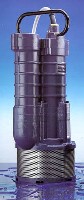 A wide variety of electric pump types are used, all must be suitably corrosion protected to a high standard, and non leachate compatible materials avoided. By far the most common are the explosion proof (ATEX zone rated) submersible large solids particle size passing “sewage” type pump types.
The types of electrical pumps used include progressive cavity borehole pumps, multistage submersible pumps, high head dual impeller multistage pumps, explosion proof pumps (inherently safe in explosive landfill gas mixtures). The web site of specialists Viridian Systems gives a list of the types of electric pumps used in leachate pumping on their web site at .
Eductive Pumps
Eductive Pumping Utilises the “venturi effect” in water as the pumping mechanism. A small volume of water at high pressure provides the motive force at the eductor located at the base of the leachate borehole or well, where the venturi is located. The eductor is based on the principle of using a small volume of water at a high pressure which inducts a larger flow at the venturi nozzle, and both the initial flow and the inducted flow is then delivered back to the starting point using the remaining water pressure (head). At the orginal pump location, a simple header tank is provided which allows the excess flow generated to discharge over a weir, and the remaining portion is recirculated through the pumps where it is pressurised and recirculated to the venturi to again educt and draw in more leachate.
Eductors have become less popular in recent years, and may not be available in some areas.
Pneumatic Pumps
 Pneumatic (air driven) Reciprocating Pumps were introduced from the US in the mid-1990s, these pumps use air as the motive force at the pump head, and are currently very popular in the UK. Pneumatic pumps can be selected for their self-regulating capability, and normally do not require require any external form of level sensor to initiate pumping. The clever design uses a lightweight (often plastic) pump float which rises with the incoming water as the pump cylinder fills. Once the pump bore fills to a sufficient depth the rising float itself activates a small lever which triggers an air valve which starts a one stroke air-cycle which forces the float back down, and with it the water which has filled the cylinder. As the float drops the inlet valve opens and the cylinder begins to fill again for the next cycle. If insufficient depth of water remains in the borehole, the float will not rise and the pump will cease to operate. All the pnuematic equipment (e.g. compressors, actuators, and controls) above the pump itself are available off-the-shelf, as these components are routinely used in so many factory applications (e.g. production line and machine tool equipment). Examples of air pumps used in leachate pumping are available here.
Centrifugal Hydraulic Pumps
Centrifugal Pumps (hydraulically driven) : “Hydrainer” pumps are the well known example of a pump which couples a hydraulically driven motor to a pump impeller. These are most commonly used in temporary applications on construction sites, but may also be permanently installed.
The selection of leachate pumps is a complex matter and the best system will vary from site to site with site conditions. While most operators do carry out their own trials and make their own pump systems selection at site level, IPPTS Associates offers to provide assistance with these tasks, including pump system tendering and installation supervision on behalf of our clients.
All pumping equipment for gassing landfills must be suitable for the ATEX zone rating appropriate to the atmosphere within the chamber or pump room it is located. For mroe information on ATEX requirements and in the United Kingdom the DSEA regulations visit the ATEX and DSEAR web site.
Electric submersible pumps have been used on all the sites I have seen. How many operators use pneumatics?
ALL of the major operators in the U.K. use them on at least some of their sites.
Also all of the major L.F.G. companies in the U.K. use them in many of their “Knock out pots”.
We have had great success using Air Operated Diaphragm Pumps, their reliability, ease of use, ability to run dry, self prime and stall against a closed valve without damage. Are all benefits when using this type of pump. We also supply compressors to run them.
Hello ..can you please brief us about Aodd pump on leachate transfer..can it able to suck liquid and deliver easily without damaging diaphragms..
Leave your contact number.
There’s definately a great deal to learn about this subject. I really like all of the points you have made.
Multistage pumps can be used for a wide range of applications such as for pumping of safe to drink water and many more. Companies that manufacture multistage water pumps offer these pumps in various sizes and also in number stages as per the flow and pressure depending upon the site conditions.
Hello, I think your site has good information, but how long should a submersible electric pump last before it needs replacement when in a landfill pumping leachate?
I just wanted to give you this quick question! There is no answer here. Other then that, excellent blog!